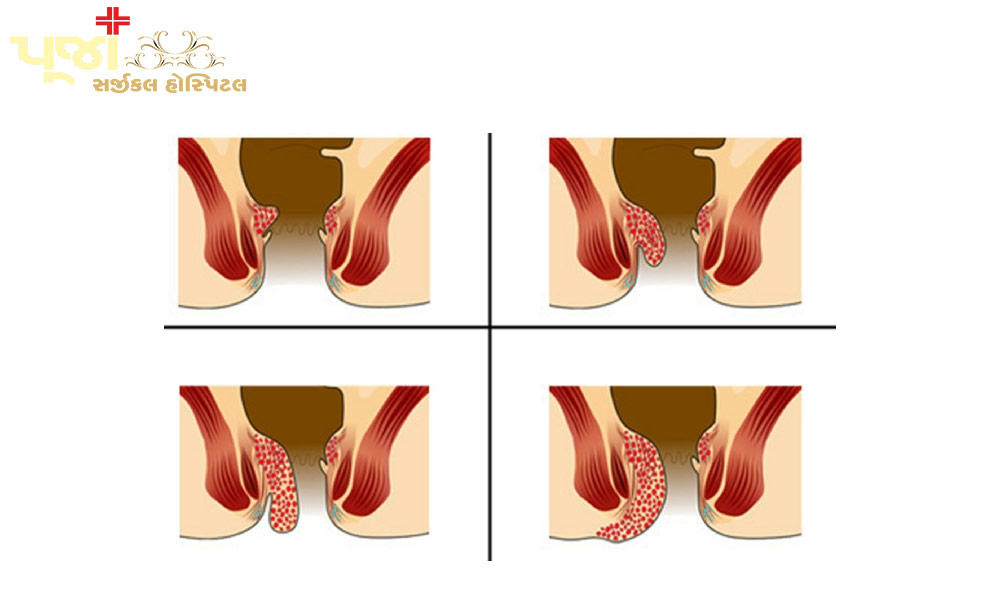
Piles, also known as hemorrhoids, are vascular structures in the anal canal which help with stool control. In their physiological state, they act as a cushion composed of arterio-venous channels and connective tissue that aid the passage of stool. They become pathological (piles) when swollen or inflamed.
Piles are a widespread ailment that may affect men or women at any age. Piles may be internal or external. In many cases, family inheritance is also seen. Women are more susceptible to piles in pregnancy as the pressure from the growing uterus restricts the blood flow in the pelvis. Lifestyle factors also have a contributory effect.
Symptoms of piles/hemorrhoids
The symptoms of Piles depend on the stage of the injury and swelling of the blood vessels of the anus. The patient can experience the following symptoms:
- Constipation or dry hard stools that need to be expelled out of the anus by force or strain during defecation.
- Bleeding while passing stools in drops or spurts.
- Bleeding or swelling of the anus that pops out while passing stools, which may or may not go back inside even by trying to push it back in.
- Giddiness and shortness of the breath along with temporary blackened sight that is caused by anaemia due to excessive loss of blood.
- Itching due to skin irritation caused by bleeding beneath the skin.
Principal causes of piles/hemorrhoids
Hemorrhoids are the result of increased pressure in veins located inside the rectum or around your anus. This pressure causes them to bulge out and create discomfort, sometimes to the point of needing to see a doctor.
While the symptoms of piles are apparent, the exact cause of the increased vein pressure within the lower rectum can vary. Hemorrhoids can result from:
- Sitting on the toilet for too long
- Pregnancy
- Being overweight
- Chronic constipation
- Chronic diarrhoea
- Not getting enough fibre in your diet
- Lifting heavy weights regularly
- Laboured bowel movements
Different types of surgeries for the treatment of piles/haemorrhoids
Only around 10% of piles cases need surgery, and it is the last resort for removing hemorrhoids. Surgery is usually considered when piles start affecting your lifestyle significantly. External or prolapsed hemorrhoids that get infected may also require surgery. Some of the well-known forms of surgery for the treatment of piles are:
Hemorrhoidectomy
In this procedure, the surgeon makes incisions around the anus to remove the formation of piles. Local or general anaesthesia is offered during the operation, and you can usually return home on the same day. After the procedure, the area might require stitches and commonly remains very tender and painful for quite some time.
Rubber band ligation
The hemorrhoids increase because of the availability of blood supply. The main idea is to restrict blood supply so the collection of tissues may be removed. In this process, it is done by keeping a rubber hand around the base of piles and thus stop its blood supply. All this leads to a fall in hemorrhoids.
Laser surgery
An accurate and distinctive laser beam is used in this method, to burn off the hemorrhoids. Patients can get back to their healthy life instantly after surgery.
Sclerotherapy
This method involves the injection of a chemical solution around the blood vessel, which supplies the hemorrhoid tissues, to shrink and kill them. Though non-invasive methods are preferred by many since they create less pain, hemorrhoidectomy may provide more long-lasting benefits.
These piles surgical treatments are safe and effective. Piles are a very treatable and common condition, and thus, there is nothing to worry about. With proper care and treatment, you will get back to good health in no time. To learn more about the various methods through which piles can be treated & to know more about our services, visit us at https://www.poojasurgicalhospital.com/