Ageing has its advantages and disadvantages. Included in the latter are piles, clinically known as hemorrhoids, which is a condition when veins in your rectum or under the skin around the anus swell. These swollen blood vessels can turn bowel movement into an intensely painful experience. Even though piles are rarely dangerous, if left ignored, it can lead to serious health complications. In this blog, let’s get a clear picture of the different symptoms and types of hemorrhoids.
Symptoms of hemorrhoids include:
- Bleeding from the anus, which is more common with internal than external hemorrhoids. It can occur before, during, or after defecation.
- Anus appears red and swollen.
- Itching, burning, swelling or pain is present near the anus.
- Itching may be present due to swelling and irritation produced by the hemorrhoids.
- Inflammation of the hemorrhoidal tissue
The different types of hemorrhoids are:
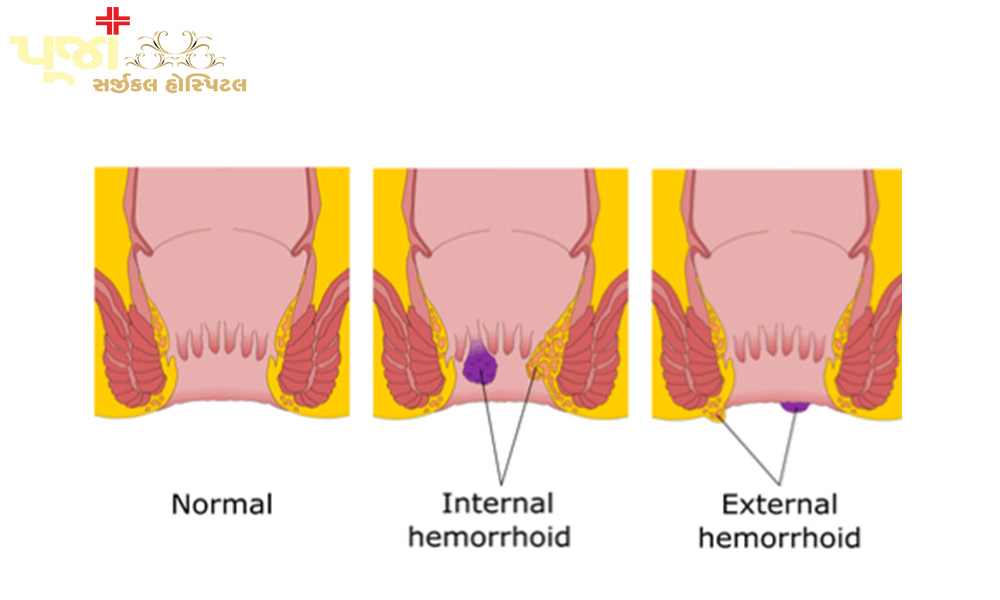
External hemorrhoids
External hemorrhoids are what most patients envision when they think of hemorrhoids. These occur at the anus as either visible or palpable lumps. Location is the only distinguishing factor between internal and external hemorrhoids, but it can make a significant difference. While internal hemorrhoids may go completely unnoticed, external hemorrhoids often produce several uncomfortable symptoms until they are resolved. Most commonly, patients report itching, burning, and pain during activity, while sitting, or during bowel movements.
Internal hemorrhoids
These types occur on the inside of the rectum (above the pectinate line) and are generally not seen or felt. It is also very rare for these types of hemorrhoids to cause a great deal of pain or discomfort as there are fewer pain-sensing nerves in their location of development above the pectinate line.
Prolapsed hemorrhoids
A more severe and painful form of internal hemorrhoids. These veins push through the anus and hang out of the body, particularly after going to the toilet. Sometimes, the anal sphincter (ring of muscle) can strangulate veins that hang out permanently.
Thrombosed Hemorrhoids
Thrombosed hemorrhoids can be identified when an external hemorrhoid has lapsed and formed a blood clot. This type of hemorrhoid is excruciating and needs immediate treatment. Thrombosed piles can either resolve themselves or turn purple and swollen. This type of pile may look scary but are not indicative of any serious health concerns. The best thing to do is avoid touching the area till you get rid of it. Again, it is advisable to get treatment instantly to prevent complications.
An anal examination is neither the most comfortable or pleasant experience for the person concerned, but is generally quick and painless, causing only slight discomfort. It can also help a doctor to make an accurate diagnosis and swiftly resolve any pain being experienced. To learn more about how to overcome piles & to know more about our services, visit us at https://www.poojasurgicalhospital.com/